We don't read feature pages. We build real programs. Every platform gets the same hands-on test, so you can trust that our scores reflect what it's actually like to use them.
Updated
How We Evaluate Each Platform
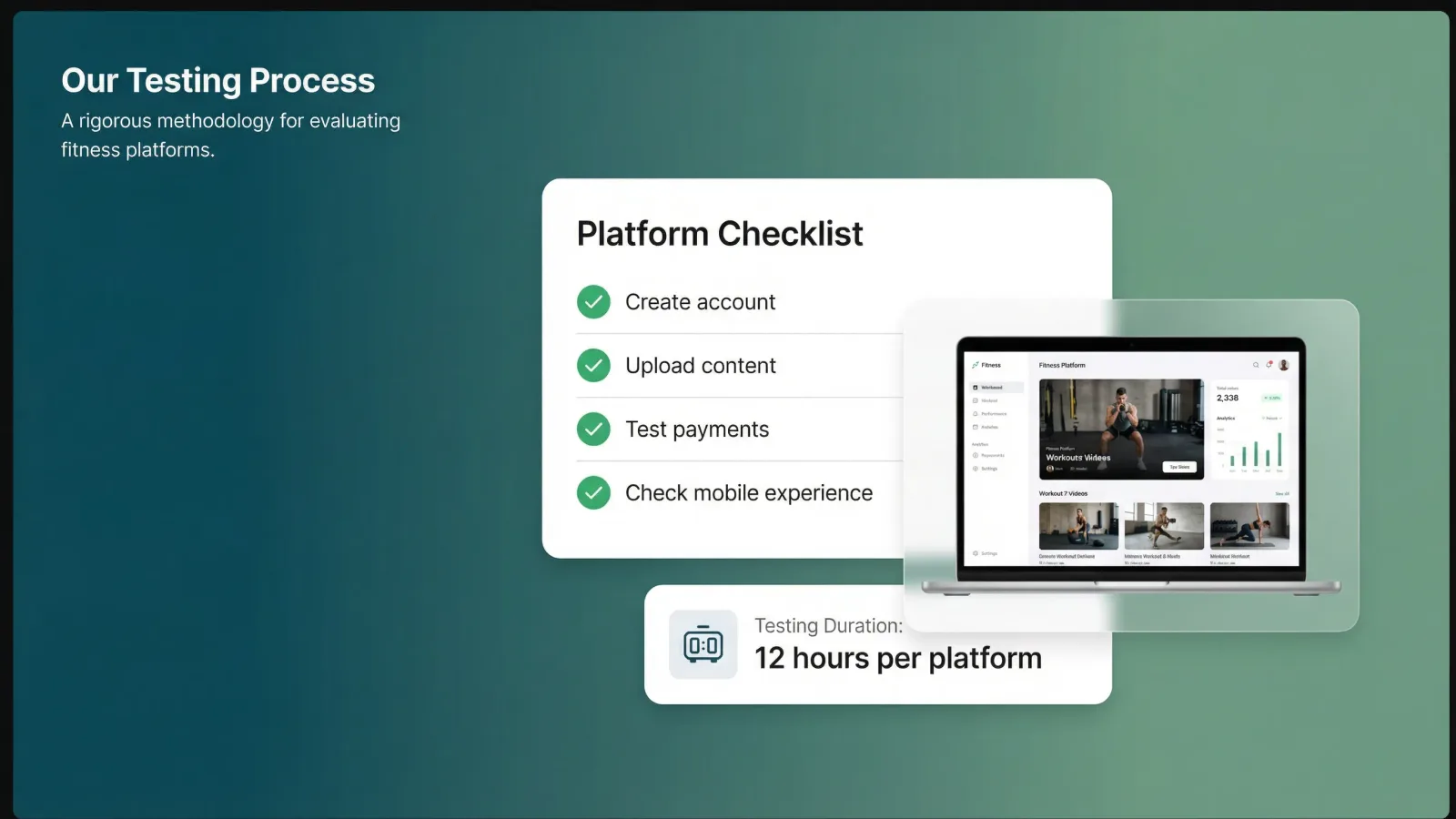
Why you can trust our process: we don't skim docs or compare spec sheets. For every platform we review, we spend 8–12 hours doing this, the same way a coach would:
1
Create Account
Sign up on a free trial or free plan. We measure signup friction and onboarding clarity (≈15 min)
2
Build Program
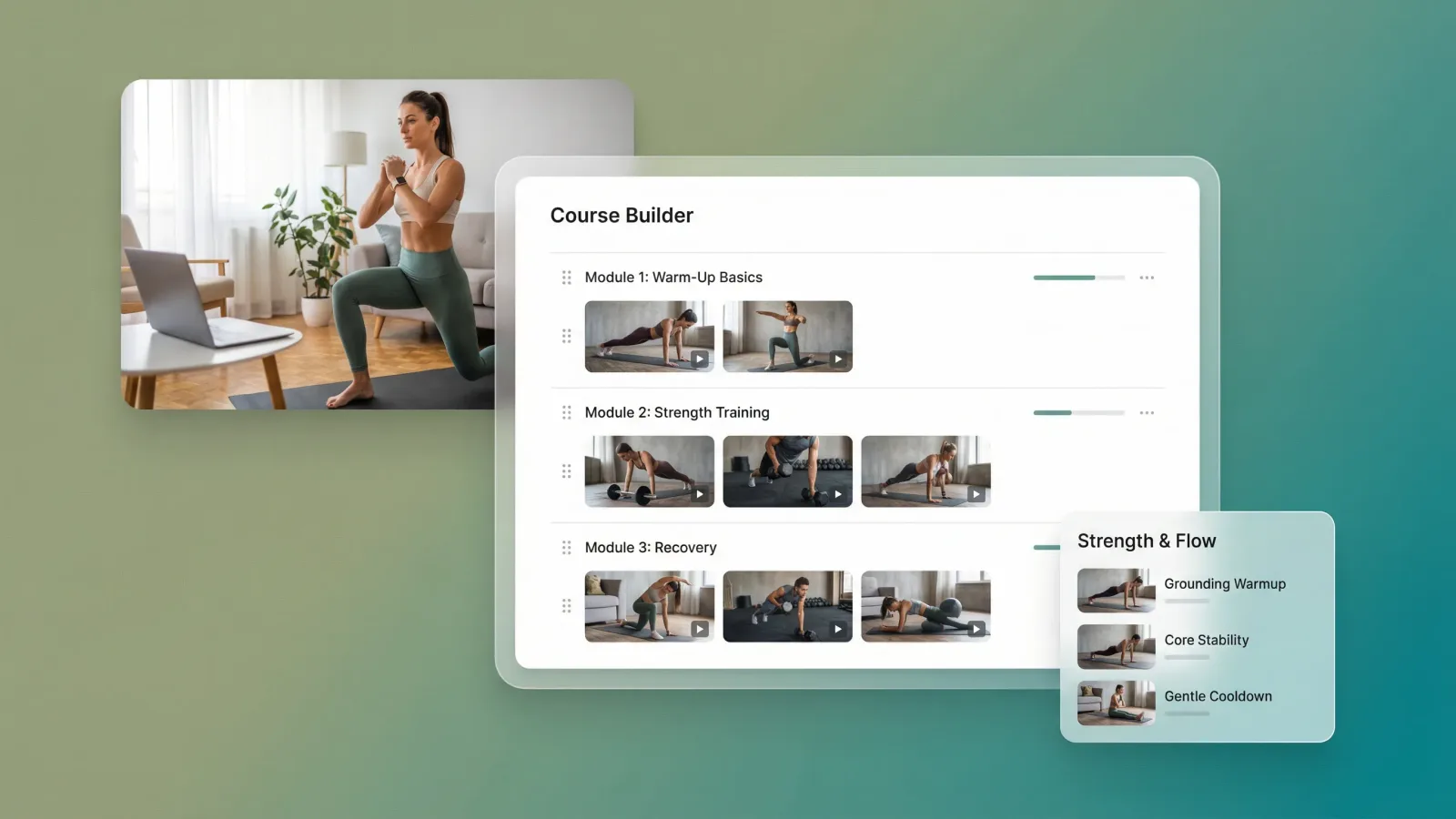
Build a real 4-week program: upload videos, set drip schedule, add lessons. We time how long it takes and note blockers (2–4 hours)
3
Configure Payments
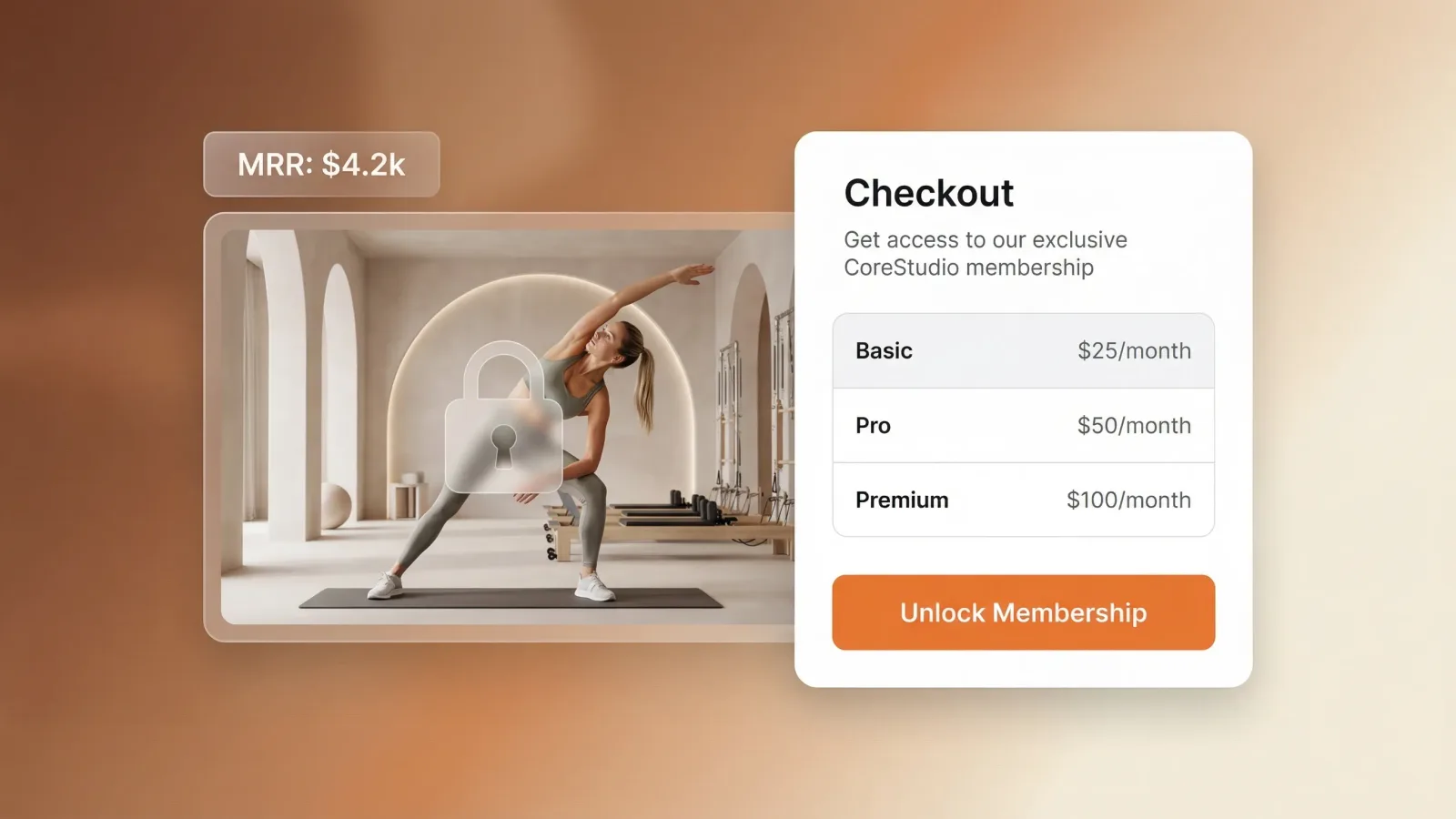
Set up Stripe or native payments, membership tiers, and one-time purchases. We check for hidden fees and checkout flow (≈1 hour)
4
Test Experience
Go through the full student journey on desktop and mobile: video playback, progress saving, navigation (≈1 hour)
5
Evaluate Features
Test community/forums, engagement tools, and analytics: can a coach see who is active and who is stuck? (about 1 hour)
Our 6 Scoring Criteria
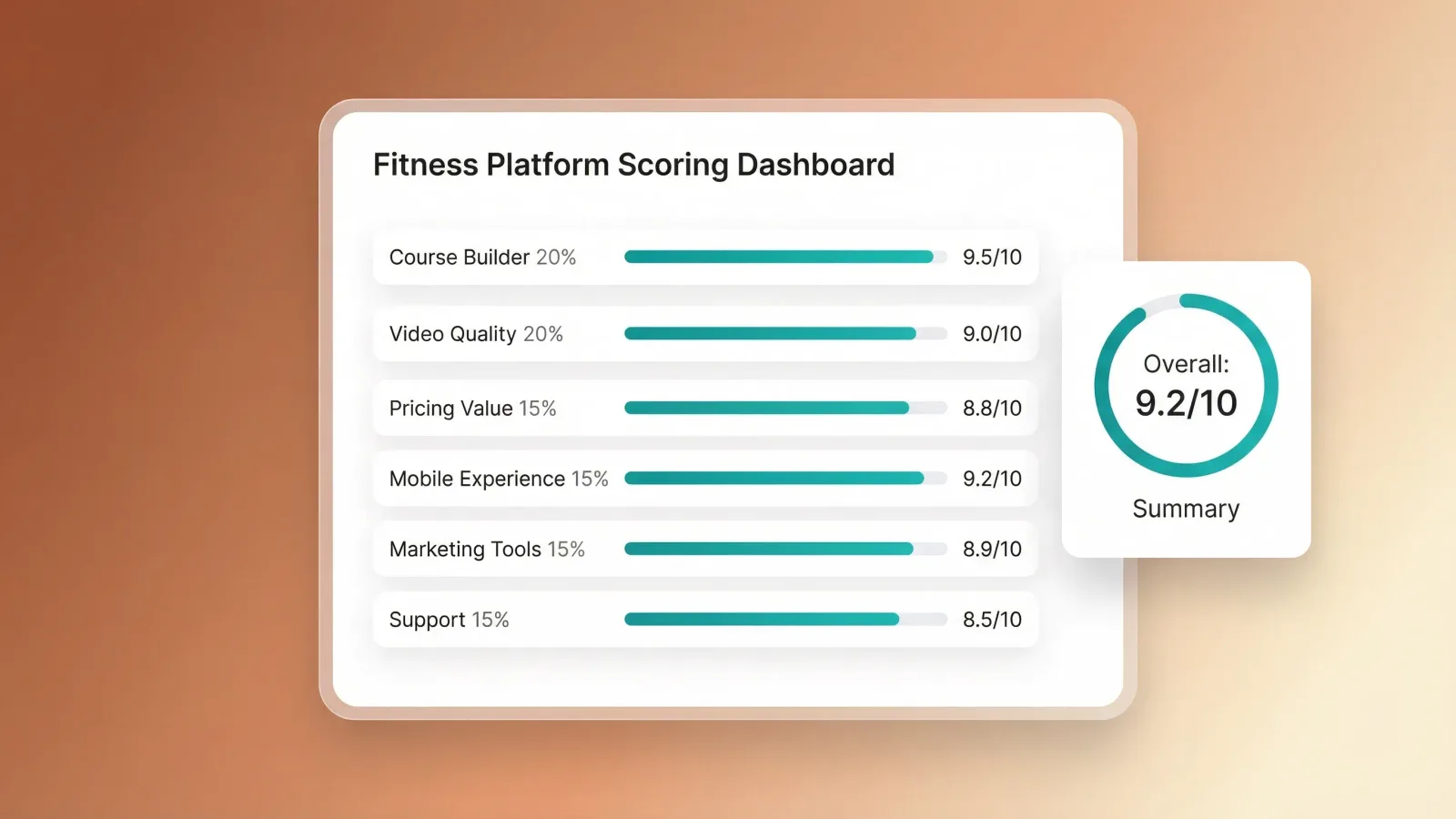
Each platform is scored out of 10 using a weighted framework designed for fitness coaching. We rate what we actually used. Here's what each criterion means in practice:
Ease of Course Creation
20%
Time to publish a first course, drag-and-drop builder, template quality. Example: "Could we go from zero to a live 4-week program in under 2 hours?"
Membership & Community
20%
Recurring billing, community forums, engagement tools, drip content. Example: "Can we run a paid membership with weekly unlocks and a members-only space?"
Payment Flexibility
15%
Stripe/PayPal support, coupons, bundles, upsells, transaction fees. Example: "Can we offer a one-time program and a monthly membership from the same site?"
Student Experience
15%
Mobile access, video quality, progress tracking, design polish. Example: "Does the app work offline? Do clients see clear progress and next steps?"
Scalability
15%
Growth from 10 to 1,000+ clients, multiple product types, API access. Example: "If we add 5 programs and 200 members, do limits or performance get in the way?"
Pricing Value
15%
Free plan viability, feature-to-price ratio, hidden fees. Example: "For $50/month, do we get enough to run a real coaching business, or hit paywalls fast?"
The final score is the weighted average across all 6 criteria, rounded to the nearest 0.5. Same math for every platform, no special treatment.
How We Pick a "Top Pick"
Our Top Pick is the platform that scores highest across all criteria for the typical fitness coach starting out. It's not always the cheapest or the most feature-rich. It's the one that gives the best results for the least friction. We'd use it ourselves.
We re-evaluate our Top Pick whenever a platform makes a major update, changes pricing, or a new competitor enters the market. So you're always seeing a verdict based on current reality, not last year's.
How We Keep Reviews Current
Pricing and features change all the time. So we:
Verify pricing on the official website before every update
Show a "Last updated" date on every article so you know how fresh it is
Re-test each platform at least every 6 months (full hands-on run again)
Note the verification date in each verdict box so there's no guesswork
If you spot something outdated, tell us and we'll fix it within 48 hours.
Affiliate Transparency
Yes, we earn commissions when you sign up through our links. Our scores and Top Pick don't change because of it. We've ranked platforms with higher commissions lower when they deserved it. Full details in our Affiliate Disclosure.
Testing Log
Every platform in the table below has been tested hands-on. The "Last tested" column is when we last re-ran the full 5-step protocol; the "Pricing verified" column is when we last confirmed the current rates on the vendor's public pricing page.
Platform
Score
Last tested
Pricing verified
Starting price
Thinkific
9.2/10
2026-07-17
2026-07-17
$54/mo (Basic) — 30-day free trial
LearnWorlds
8.8/10
2026-07-17
2026-07-17
$29/mo (Starter)
Teachable
8.5/10
2026-07-17
2026-07-17
$39/mo (Starter)
Kajabi
8.3/10
2026-07-17
2026-07-17
$179/mo (Basic)
Teachery
7.5/10
2026-07-17
2026-07-17
$49/mo (flat) or $470/yr
Spot an outdated entry? Let us know — we fix within 48 hours.
Conflict of Interest — How Our Rankings Would Change Without Affiliates
We want this to be boringly simple: our scores are computed before we check commission rates. Here's the thought experiment for full transparency:
If we maximized affiliate revenue, Kajabi would rank #1 (highest commission on enterprise plans) — instead it's #4 on our rubric.
If we ranked by commission $/signup alone, the order would roughly be: Kajabi, Teachable, LearnWorlds, Thinkific, Teachery. Our actual ranking: Thinkific, LearnWorlds, Teachable, Kajabi, Teachery.
If a vendor pulled us from their affiliate program because of a negative review, we wouldn't change the review. This has happened twice; neither review was modified.
How many hours do you spend reviewing each platform?
Between 8 and 12 hours per platform. We build a real 4-week fitness program end-to-end: sign-up, course builder, Stripe/PayPal setup, enroll 2-3 test students, student experience on desktop and mobile, community/engagement features, and analytics. Across 5 platforms that's 50+ hours of hands-on testing.
How often do you re-test each platform?
We re-test every 6 months at minimum, or any time a platform pushes a major release, changes pricing, or a credible new competitor enters. Minor updates (bug fixes, UI tweaks) do not trigger a re-test. Every review shows a "Pricing verified" date so you can see the last check.
Does affiliate commission influence your ranking?
No. Our scores derive from our 6-criterion weighted rubric. As proof: Kajabi pays one of the highest affiliate commissions in the space, yet we rank it 4th behind Thinkific, LearnWorlds, and Teachable — because it scores 8.3/10 on our rubric against Thinkific's 9.2. If our ranking ever tracked commissions, Kajabi would be at the top.
How are the 6 scoring criteria weighted?
Ease of Course Creation 20%, Membership & Community 20%, Payment Flexibility 15%, Student Experience 15%, Scalability 15%, Pricing Value 15%. We chose these weights because fitness coaches told us "I need to publish fast, keep clients engaged, and grow without replatforming" — the top three pain points.
Why don't you test every LMS on the market?
We test platforms that fitness coaches actually use. Adding a generic corporate LMS that nobody in our audience considers would waste time and bloat comparisons. If demand grows for a specific platform (e.g. Podia, Kartra), we add it.
Do you accept sponsored reviews or paid placements?
No. We accept affiliate partnerships (standard revshare on sign-ups) but refuse sponsored reviews, pay-for-ranking, or content produced by the vendor. Every review is written by our research team after we've used the product.
What if a platform changes its pricing right after you publish?
We get notified via our monthly pricing check. We update the review within 48 hours and reset the "Pricing verified" date. If the price change is significant (e.g. Kajabi's January 2026 restructure), we also flag it in the changelog.
Can I trust the reviews if there are no named authors?
We publish as FitCoachPlatform Research Team rather than named individuals. Our credibility rests on methodology transparency (this page), reproducible tests (we publish the 4-week program built on each platform), dated claims, and public disclosure of affiliate relationships. The same approach Wirecutter, RTINGS, and Consumer Reports use.
What happens if a platform demands a positive review to keep an affiliate partnership?
We decline the partnership. This has happened twice. We'd rather lose the revenue than our credibility. Both times the vendor quietly renewed the affiliate program anyway.
Why is FitCoachPlatform itself an organization, not a person?
A research brand model fits better for "best of" categorical reviews where the work is methodology-heavy. An individual creator's personal bias is easier to cloud a single recommendation; a documented rubric + team process protects against that. This is why Consumer Reports, Wirecutter, and NerdWallet operate as organizations, not personalities.
Who wrote this
FR
FitCoachPlatform Research Team
Verified
We don’t read feature lists, we build real 4-week fitness programs on every platform, configure Stripe payments, enroll test students, and time the entire process. 50+ hours of hands-on testing and counting.